Circular Economy Strategies for Sustainable Digital Devices and the Right to Repair
A Coruña, January 23rd, 2026
Organized by
IU-RESCAT University Research Institute for Sustainability, Climate Change and Energy Transition (Universitat Rovira i Virgili) & Universidade A Coruña
IU-RESCAT is a multidisciplinary research institute whose mission is to address the complex issues of Sustainability, Climate Change and the Energy Transition through the findings of our research in five key areas: Basic Climate Change Science; Environmental and Climate Economics; Territorial Analysis; Governance, Environmental and Energy Transition Law, Environmental and Climate Justice; Health Risks, Analysis of Human Behavior, Impacts of Pollution on People, and Ecosystems Solutions; and Technological Solutions, Development of Environmental Monitoring and Analysis Systems.
Workshop objectives
Digital sustainability refers to minimizing environmental impact across the lifecycle of digital devices (covering raw material extraction, production, distribution, usage, and disposal). It aligns with the circular economy framework, which promotes resource efficiency, reuse, and recycling to reduce dependency on finite materials, thereby extending product life and value. The digital device industry (smartphones, laptops, tablets) contributes significantly to e-waste, energy consumption, and carbon footprint through complex global value chains. Addressing sustainability in digital technologies requires tackling material intensity, short lifecycles, and low repairability. While economics provides tools to analyze market failures and incentives, and law frames compliance, accountability, and rights and duties, technology offers the means to innovate: from eco-design and modular hardware to energy-efficient software, cloud optimization, and new recycling processes. Together, these three dimensions (economics, law, and technology) form a comprehensive approach to making digitalization both environmentally and socially sustainable.
In this event, we will focus the debate on the right to repair (R2R). How do the law frames face it. Is the market prepared for the exercise of this right? Which are the technological challenges? Accordingly, we have designed three sessions to be organized:
- “The Economics of Reparability: Incentives, Costs and Market Dynamics” (including Incentives for manufacturers vs. repair businesses, Incentives for manufacturers vs. repair businesses, and Design-for-repair innovations, R2R Regulation),
- “Regulation Meets Technology: Standards, Compliance, and Enforcement” (including Costs and benefits of compliance for producers, EU’s Eco-design Regulation, and Development of repairability metrics),
- “Circular Futures: Innovation, Policy, and Social Acceptance” (including New business models, Public procurement policies, Consumers, and Emerging repair-enabling technologies).
This event will take place within the framework of the Agreement between the public entity Red.es and the consortium of institutions formed by the Universidad del País Vasco / Euskal Herriko Unibertsitatea, the Universitat de València, the Fundación Instituto de Investigación Sanitaria “Marqués De Valdecilla”, the Entidad de Gestión de Derechos de los Productores Audiovisuales (EGEDA), the Universitat Rovira i Virgili, and the Fundación Hay Derecho to promote the implementation of the Digital Rights Charter in the field of specific environments (project reference: C036/23-OT).
Keynote Speaker
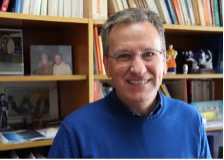
Xavier Vence is Full Professor of Economics at the Department of Economics of the Universidade de Santiago de Compostela. His research focus on circular economy, sustainability and environmental policies. His research outputs include more than 150 publications that have been published in journals like Conservation and Recycling, Waste Management, Resources, Conservation and Recycling, and Journal of Cleaner Production among others.
Submission of papers
Extended abstracts (minimum of 500 words) should be submitted electronically in PDF format to Patricia Sangama (patriciamelissa.sangama@urv.cat) by December 15th, 2025. The front page of the document should include the title, authors, affiliations, and contact details. Please indicate the preferred session. The deadline for notification of accepted papers is December 18th, 2025.
Location and Travelling
CEIDA (Centro de Extensión Universitaria e Divulgación Ambiental de Galicia). Castelo de Santa Cruz, Concelo de Oleiros (A Coruña), Galicia.
Accommodation and travel
Presenting participants will be offered up to two nights accommodation for free and travel from EU, UK, Switzerland and Andorra. The accommodation will be booked by the organizers.
Registration and fees
There are no fees for attending the workshop, but registration is compulsory for presenters and non-presenters. The activities of the workshop include coffee breaks and a lunch.
Scientific Committee
| Aitana de la Varga Pastor (IU-RESCAT, Universitat Rovira i Virgili) | Josep-Maria Arauzo-Carod (IU-RESCAT, Universitat Rovira i Virgili) |
| Itziar Sobrino García (Xunta de Galicia, Universidade A Coruña) | Jennifer Sánchez (Universidade A Coruña) |
Organising Committee
| Aitana de la Varga Pastor (IU-RESCAT, Universitat Rovira i Virgili) | Josep-Maria Arauzo-Carod (IU-RESCAT, Universitat Rovira i Virgili) |
| Patricia Sangama (CEDAT, Universitat Rovira i Virgili) | Juan José Pernas García (Universidade A Coruña) |
 Josep-Maria Arauzo-Carod